HUNITY
Solar cell tests and an education platform (NMHH-1)
In orbit- Format
- 3P PocketQube
- Size
- 5 × 5 × 15 cm
- Mass
- 868 g
- Launch
- November 28, 2025
SpaceX Falcon 9, Transporter-15, Vandenberg - Orbit
- 520 km sun-synchronous
- Callsign
- HG1NMHH
- Frequency (UHF)
- 437.390 MHz
GMSK
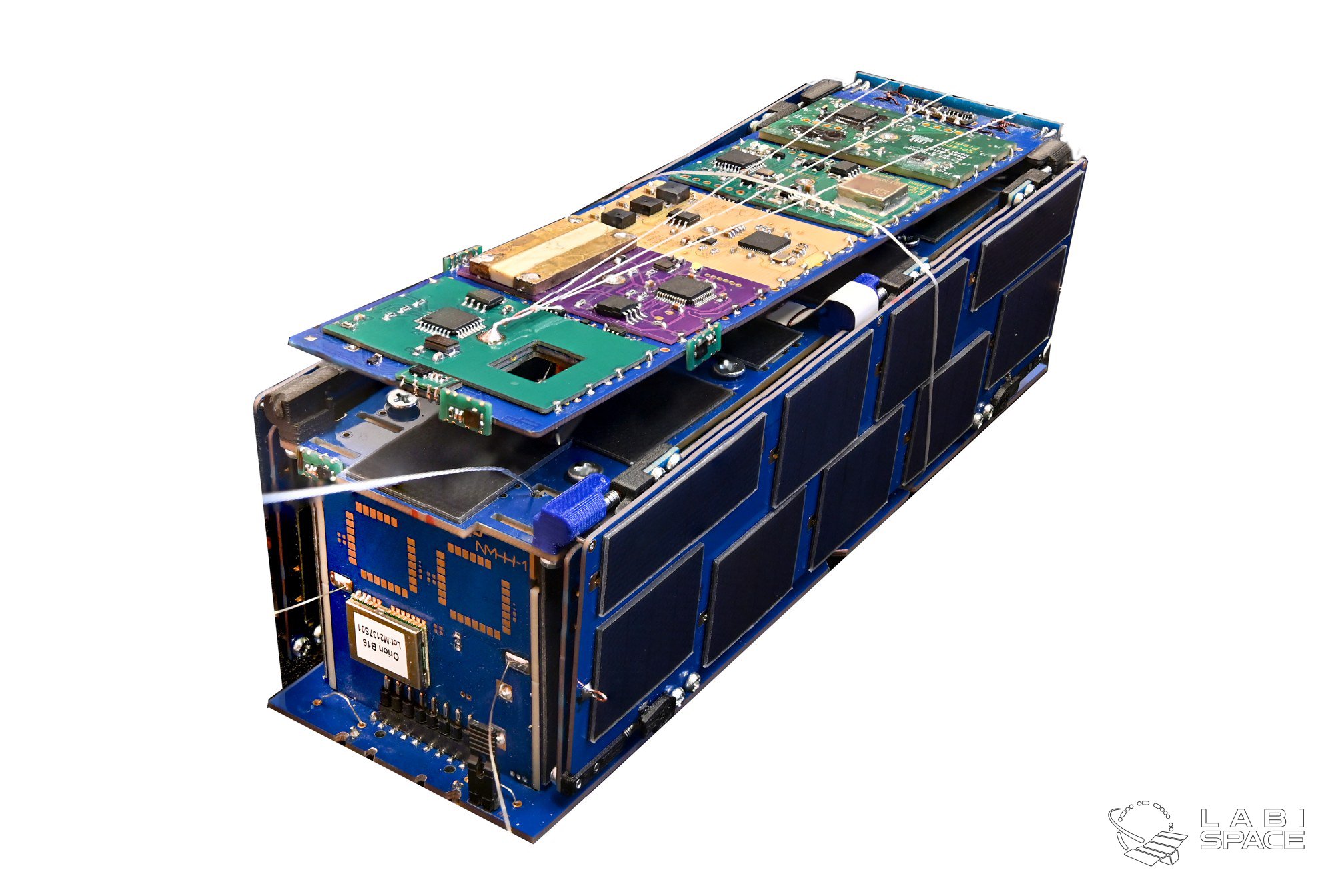
HUNITY (also registered as NMHH-1) is BME’s sixth student satellite, built by the Microwave Remote Sensing Laboratory together with the BME Radio Club and the National Media and Infocommunications Authority.
It launched on 28 November 2025 on SpaceX’s Transporter-15 rideshare from Vandenberg and reached its 520 km sun-synchronous orbit the same evening. The team’s ground station received its first signal on 29 November.
HUNITY has deployable solar panels for more power, a second set of deployable experimental panels made by secondary-school students, a camera, magnetic and motor-driven attitude control, and a tester that compares several solar cell types in space. Its primary ground station is on the roof of building E at BME, with a secondary station in Érd.
In education, HUNITY brought 29 students from 12 schools, in 6 teams, into a real space mission.
Subsystems
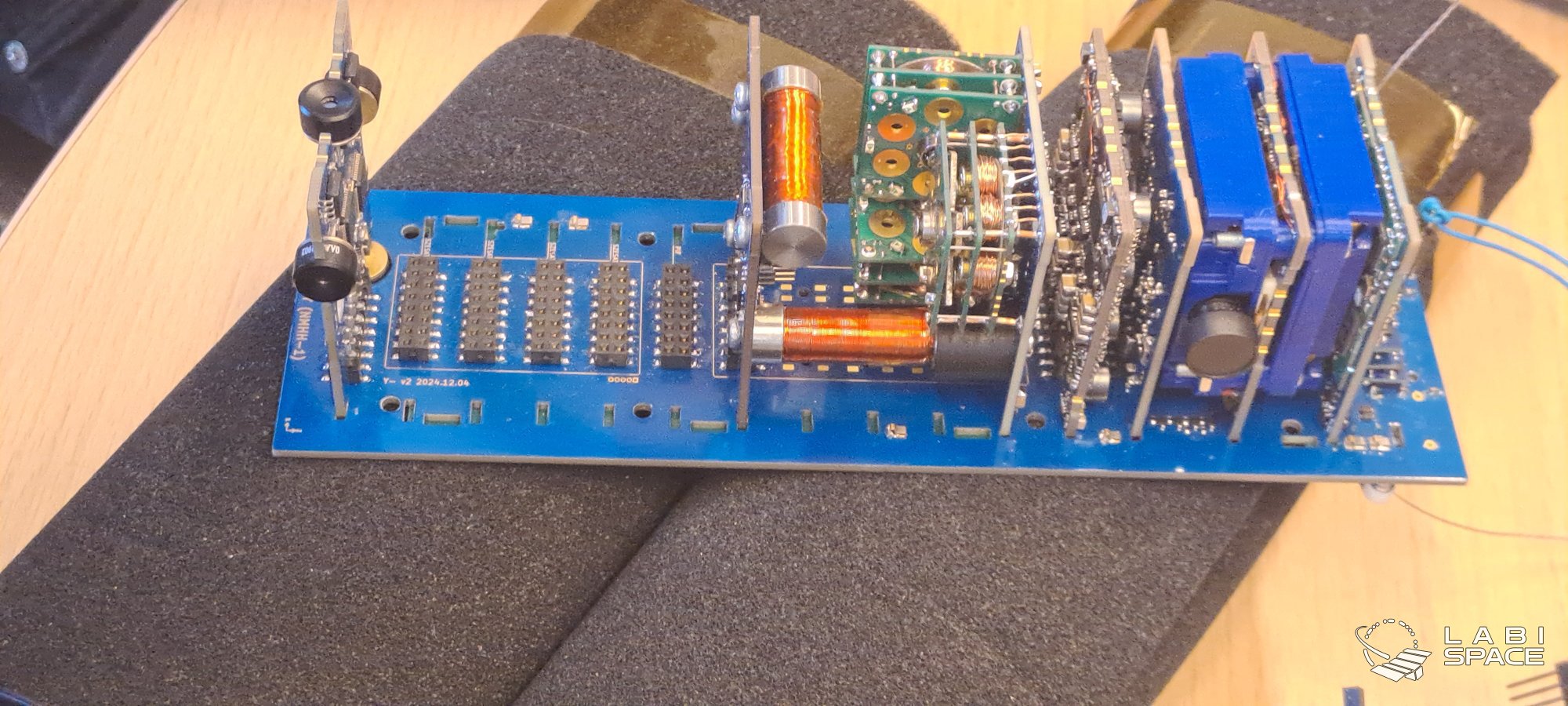
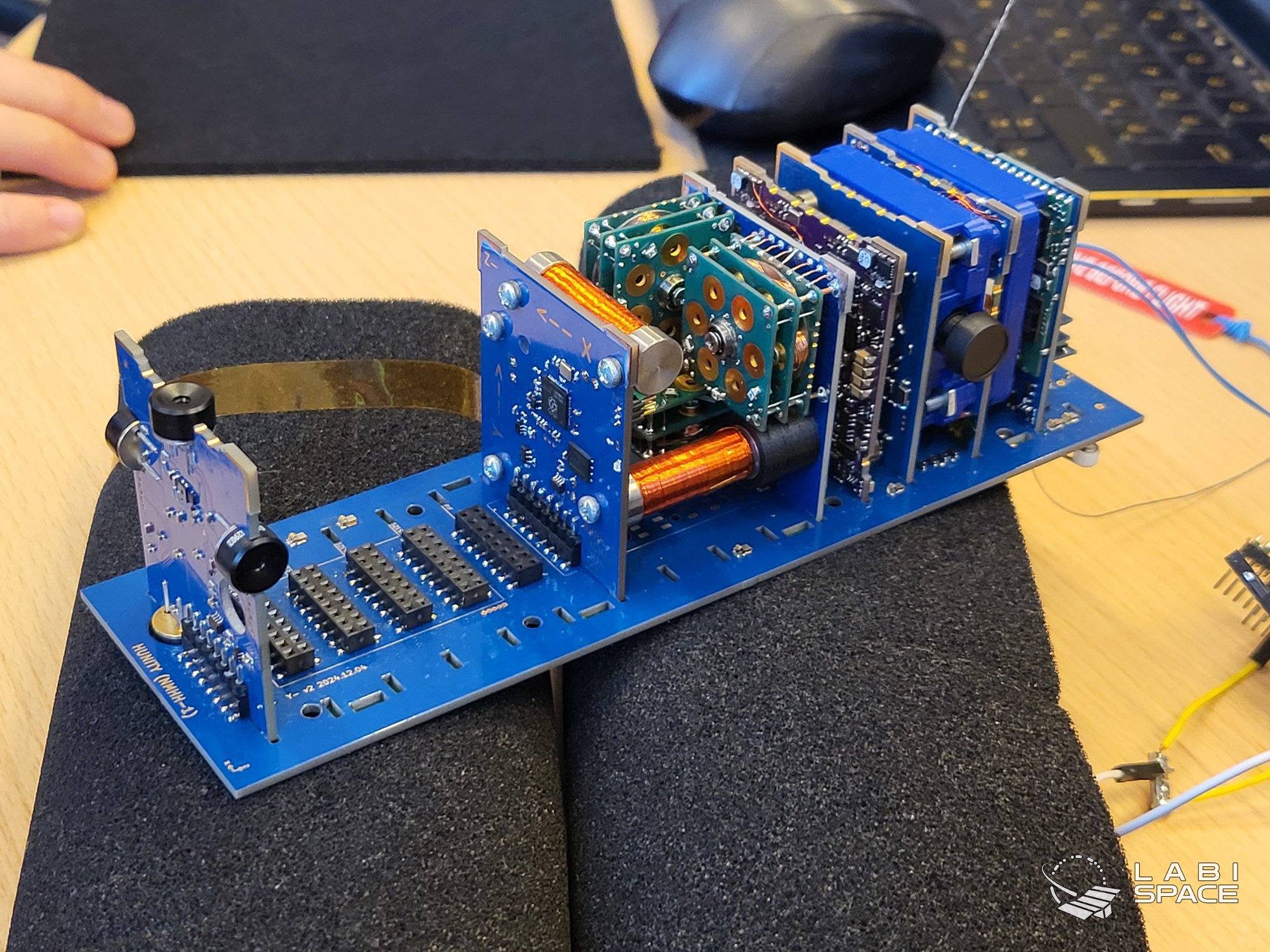
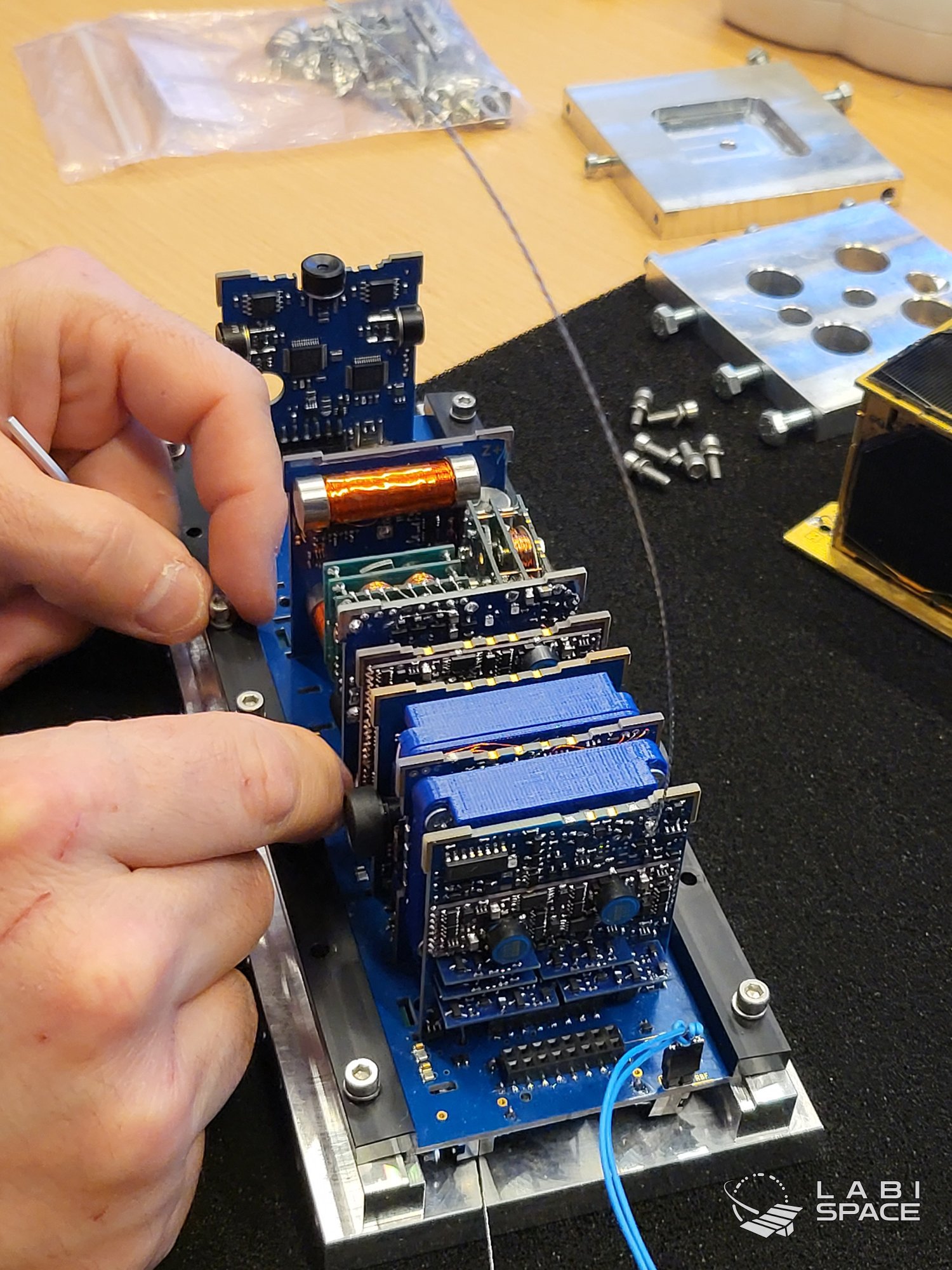
- EPSRP2040-based power system: regulated 3.3 V, 6-channel MPPT solar charging, power telemetry
- OBCData collection and storage, task scheduling, telemetry generation
- BATBattery protection, sensor logging, attitude determination, SGP4 position calculation
- GRSSpace-qualified GPS and 27G RadNano ionising radiation meter
- COM437.390 MHz radio with its own power supply; supports in-orbit reprogramming
- ACMAGActive magnetic attitude control with three-axis coils
- ACMOTRotating-mass attitude control with a reluctance motor on three axes
- SUN16 × 12 far-infrared matrix sun and horizon sensor, 4 directions, 110° × 75° each
- PIFRaspberry Pi Pico and FPGA experiment for science outreachPartner experiment
- SCLTSolar cell life tester: Azurspace GaAs (3 and 4 junction), YimSpace GaAs, Anysolar mono-Si
- EDUSix experiments from secondary-school teams: Capysat, Celeritas, Kulinsat, Onionsat, Seat, SeraphPartner experiment
Existing pages and data
Supporters
NMHH, ATL Zrt., BHE Bonn Hungary Electronics, 27G, Ewiser Forecast, wpower
Gallery
Publications and media
- Electrical power system of HUNITY PocketQube satellite integrated into space engineering education (H-Space 2026, Budapest, 2026)
- Huniverzum (BME, 2025)
- Simulation of a satellite-based radiometric detector and detector response using the Monte Carlo method (BSc thesis, BME, 2025)
- BME small satellite HUNITY (bme.hu, 2025)
- Pályára állt az űrben a BME hallgatói által készített műhold (Eduline, 2025)
- Alba Orbital to launch 4th PocketQube, HUNITY, for BME (Alba Orbital, 2025)